

 Bangkok, Thailand
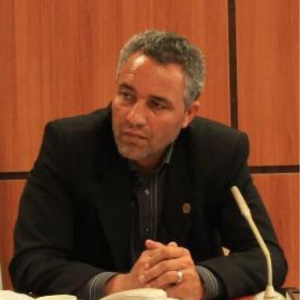
Hamidreza Khankeh
Professor, Karolinska Institute
Prof. Hamidreza Khankeh is a full professor at the University of Social Welfare and Rehabilitation Sciences (USWR) in Tehran, Iran, in the field of Emergencies and Disasters Health management and expert in designing qualitative and mixed methods studies. He has been affiliated as a senior researcher at Karolinska Institute, Department of Clinical Science and Education, Stockholm, Sweden until May 2024 and is now affiliated as a research fellow to the Berlin Institute of Health (BIH), Charité - Berlin, Germany.
In 2002, he began his doctorate focusing on emergency and disaster health at the Iran University of Medical Science (IUMS) and completed it in 2007 using the Grounded Theory methodology. Later, he received a Post-doctoral degree from the Karolinska Institute Sweden, Department of Clinical Science and Education in the Emergencies and Disasters Health field with a qualitative paradigm focus (2010-2015). In addition, he has participated in several imperative fellowships; in Japan, in emergency health coordination, and Sweden, in the socioeconomic determinants of health and safe community, with an emphasis on implementing qualitative paradigms.
Since 2017, he has been honored to be a permanent member of the Iranian National Academy of Medical Science, and in February 2020, this academy selected him as one of the nation's leading researchers. In April 2019, he was awarded a Georg Forster Research Fellowship for experienced researchers by the Alexander Von Humboldt Foundation to conduct research at the Free University of Berlin on "Disaster Risk Reduction in Tehran (the capital of Iran) by Improving Disaster Risk Understanding and Social Trust."
Since 2008, he has taught Master's and Ph.D. courses in public health, emergency, and disaster risk management in the field of public health, and qualitative research methodology (Basic, intermediate, and advanced) at several universities in Iran, Sweden (Karolinska Institute, Västerås, MidSwden), Germany Leipzig University, University of Tübingen, Free University of Berlin and Poland (University of Gda?sk).
Two years ago, he joined the PSE group and gave us lectures on open science, PSE, and qualitative research. Based on his training experience with students and researchers in Sweden and Iran, and different national and international projects in which he used qualitative and mixed methods he has designed three modules of qualitative research methodology for BIH including the basic, intermediated, and advanced.